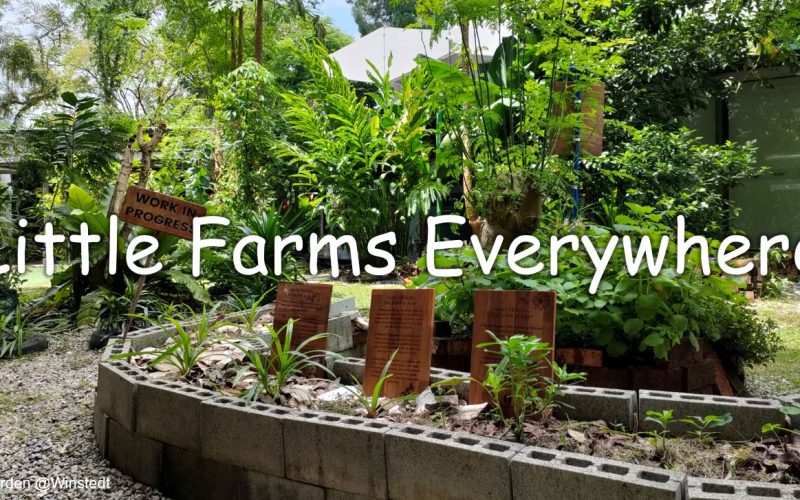
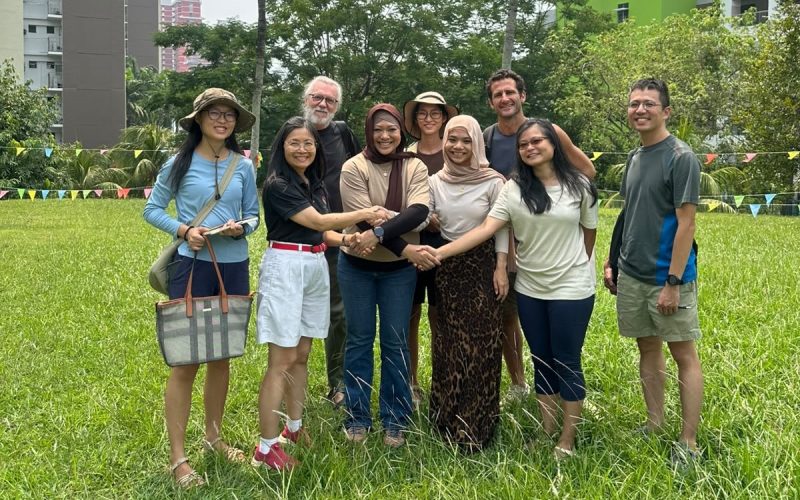
Our Collaborative Procurement Framework is a key component of our Little Farms Everywhere endeavour and applies the permaculture design principles “integrate rather than segregate” and “use and value diversity” onto the procurement process. Selected Certified Permaculture Designers participate in a Design Competition cum Studio where designers work together, whilst benefiting from the element of healthy competition to elicit diverse ideas.
The Framework aims to foster a collaborative spirit among Certified Permaculture Designers, and helps build capability and camaraderie among the permaculture community in Singapore, whilst pioneering a transparent procurement process that departs from the prevailing winner-take-all model, to enable the permaculture ecosystem to evolve positively and flourish.
As there are not many examples of permaculture in the urban tropics, there is opportunity for Singapore to be a test bed for permaculture for tropical built environments, including its procurement framework and social impact.
1 Accreditation

- TCHS is the only body in Singapore offering an internationally recognised Permaculture Design Certificate (PDC) Course accredited by the Permaculture Research Institute, Australia.
- TCHS maintains a Panel of Certified Permaculture Designers for our Little Farms Everywhere projects, comprising those who graduated from our PDC Course as well as those accredited to be on the Panel, to establish a good foundation for permaculture practice in Singapore.
2 Design Brief
- TCHS works with the Primary Stakeholders / Gardeners to understand their aspirations which are then translated into key objectives.
- Permaculture design principles and ethics provide the foundation for good design to meet these objectives
- Basic information required typically include site topography, location of existing services, authorities’ requirements, stakeholders’ concerns, landlord’s house rules, budget, timeframe, etc.
3 Design Process

- TCHS will facilitate the formation of two teams typically comprising 3 Certified Permaculture Designers each. Each team will be paid an honorarium for their proposal.
- The judging panel will typically comprise representatives from the relevant stakeholders and a TCHS representative who is a Certified Permaculture Designer. TCHS will assist with the judging criteria.
- Stage One – both teams work independently on their design proposals as well as implementation strategy. Judges need not select one proposal and can ask the designers to consolidate the best ideas from both proposals into one.
- Stage Two – the two teams are now combined into one, to develop the design based on feedback given by judges in Stage One. Judges will review the design again to decide on the design to be implemented.
4 Public Exhibition

- After the proposal is selected or decided on, a simple exhibition will be conducted where the Permaculture Designers can present their proposal(s) to relevant stakeholders and the public. The judging panel can provide reasons for selection of the proposal(s).
- The exhibition also gives the relevant stakeholders and the public an opportunity to understand the procurement and implementation process, and helps to generate public interest.
5 Implementation
- Subsequently, the Permaculture Designers will lead in the implementation of the design, and also enlist the help of those who did not participate in the design process, e.g. experienced gardeners from our network of Little Farms.
- Those involved in implementation are paid an honorarium to not only implement the design, but to guide the Primary Stakeholders / Gardeners through workshops and working bees.
- The new garden thus becomes part of our polycentric network of Little Farms Everywhere.
Key Outcomes
- Collaborative spirit – consistent with permaculture principle to integrate rather than segregate, the collaborative approach strengthens the community of Certified Permaculture Designers and gardeners.
- Use and Value Diversity – the collaborative process enables diverse ideas to emerge; the whole is more than the sum of its parts.
- Healthy competition – the competitive element ensures transparency without excluding those whose proposal(s) are not selected; everyone can participate in the implementation process. There are no losers.
- Helps build competency – individuals with relatively little experience can learn together with more experienced permaculture designers and build up competency and confidence in preparing proposals, and are not left to implement alone.
- Helps build camaraderie – multiple opportunities to work together.
- Continuous improvement – exhibition helps everyone see how they can improve their design approach.
- People Care – the implementation process creates a sense of ownership and responsibility for the primary stakeholders/gardeners, providing the foundation for long-term success.
Written by
Catherine Loke
on behalf of the Permaculture Procurement Working Group