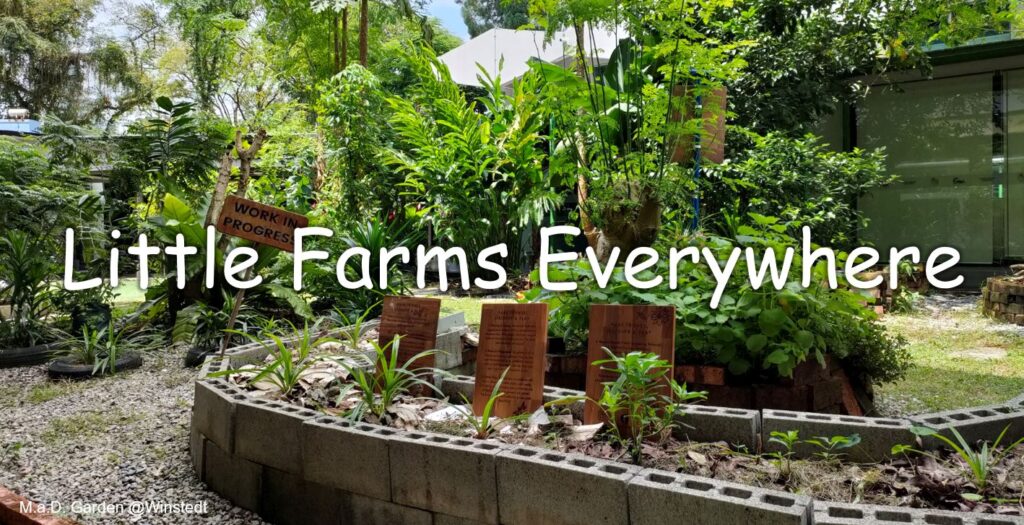
In 2022, TCHS Founding President Catherine Loke in her talk Little Farms Everywhere observed that land in between and around buildings can be used to transform the urban environment into one where humans can flourish while staying within planetary boundaries, using permaculture as a simple but powerful approach.
Why Permaculture
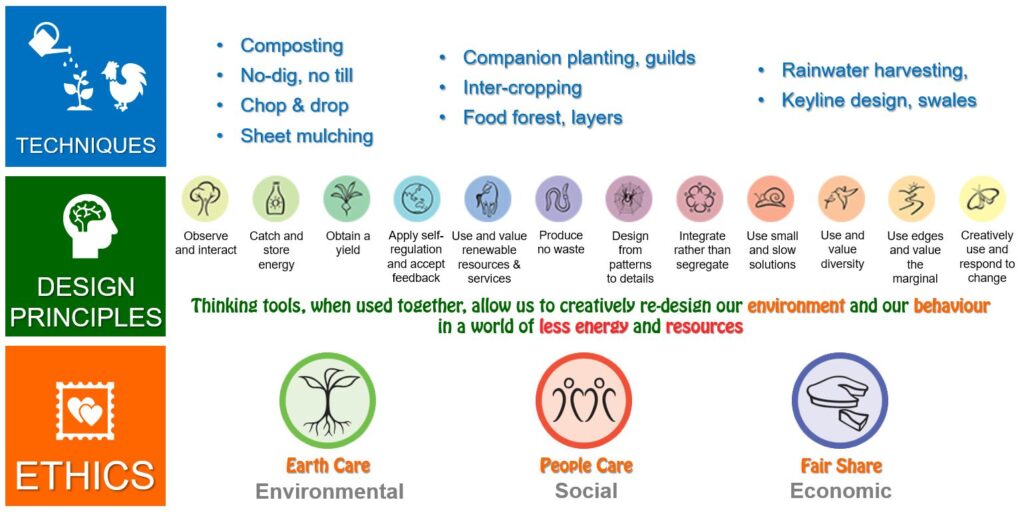
To the uninitiated, permaculture appears to involve techniques like composting, companion planting, etc., which are not necessarily unique to permaculture. While the techniques are used to bring about physical change, permaculture is a design science and methodology which involves deliberate decisions on how to employ these techniques based on permaculture design principles which in turn are founded on three ethics – Earth care, People care & Fair share. Together, the Ethics, Design Principles and Techniques form a holistic strategy to enable us to live in balance with our environment and in Harmony with Nature.
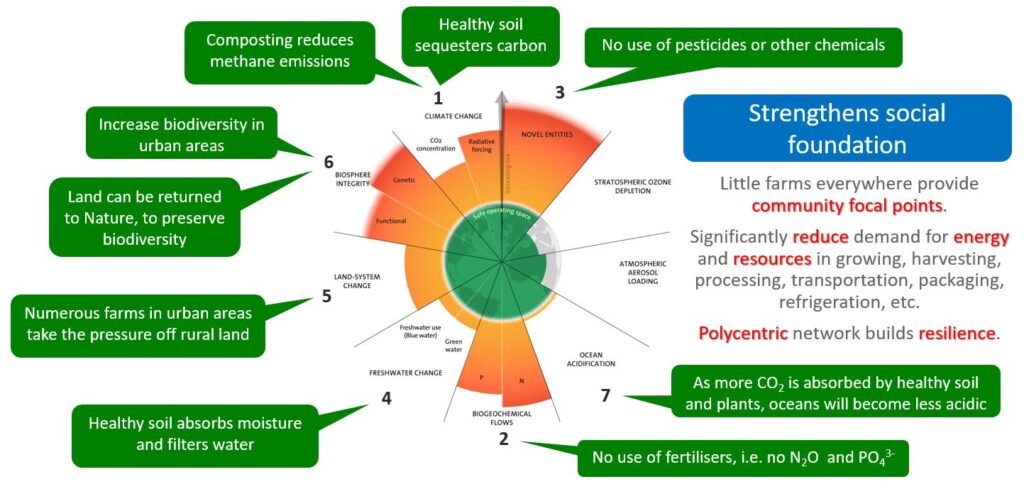
https://www.stockholmresilience.org/research/planetary-boundaries.html
In permaculture, the path to a healthy ecosystem starts with building healthy soil which puts us on the right path towards living within planetary boundaries.
As at September 2025, we have exceeded 7 planetary boundaries. Healthy soil can help us return to the safe operating space like so:
1️⃣ Climate Change – healthy soil absorbs carbon which will reduce CO2 in the atmosphere;
2️⃣ Nitrogen & phosphorus pollution – healthy soil does not need artificial fertilisers that kill microbes and cause eutrophication;
3️⃣ Novel Entities – with healthy soil, a farming system based on a healthy ecosystem can be established hence there are no pests and no need to use pesticides or other chemical cocktails;
4️⃣ Freshwater – healthy soil absorbs water and supports natural transpiration which creates life-giving micro-climates, and hydrological cycles which clean our water;
5️⃣ Land Systems Change – healthy soil can support more urban farming, even in small spaces between and around buildings, and regenerate urban ecosystems; if we can plant more food in cities, it reduces the reliance on rural land, hence we can reverse deforestation;
6️⃣ Biodiversity Loss – healthy soil is the foundation of biodiversity which supports healthy ecosystems, regenerating the Web of Life both in rural and urban environments;
7️⃣ Ocean Acidification – this is caused by CO2 dissolving in seawater; as healthy soil absorbs carbon, a reduction in CO2 in the atmosphere will also reverse ocean acidification.
Permaculture design can also empower individuals and communities to take positive action to not only grow their own food but to build self-reliance, social resilience and polycentric networks while reducing reliance on artificial energy inputs and non-renewable resources.
How we bring about Little Farms Everywhere
TCHS is an enabler, not a landscape designer or landscape contractor. We do not set up gardens for you but enable YOU to set up a permaculture garden YOURSELF. By doing it yourself, you take ownership of the project to ensure its success, and build resilience along the way.
Four parties are needed:
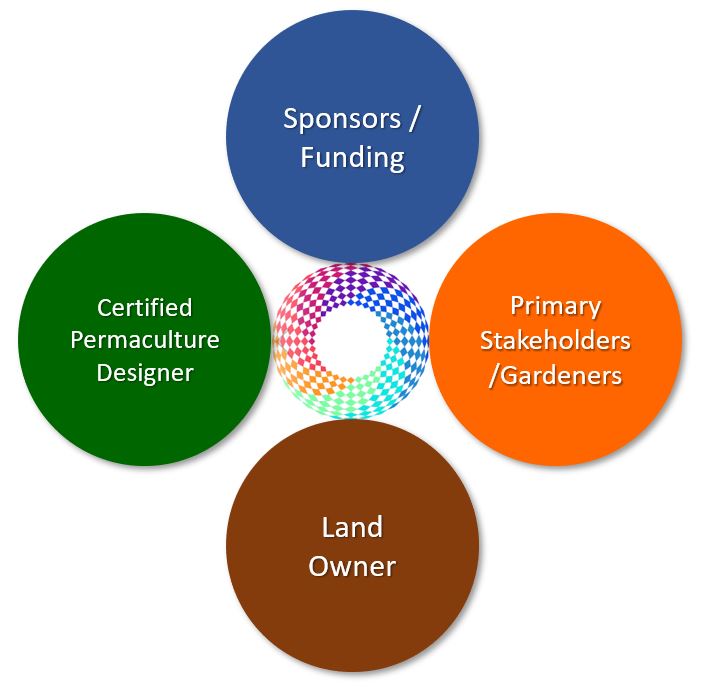
- Land owner – it is essential to have legitimate access to land to avoid wasted effort;
- Primary Stakeholders / Gardeners – people must want a permaculture garden and be committed to learning how to set up and maintain their permaculture garden;
- Certified Permaculture Designer(s)* – it is essential for the design to be done by those with the appropriate skills and knowledge to lay the right foundation for the permaculture garden; and
- Sponsors / Funding – permaculture gardens are not expensive to set up compared to other gardens that rely on artificial systems, however, there are start up costs that need to be funded.
*Designers are selected through our Collaborative Procurement Framework.
Little Farms Everywhere Projects
Written by
Catherine Loke
on behalf of the Permaculture Procurement Working Group